
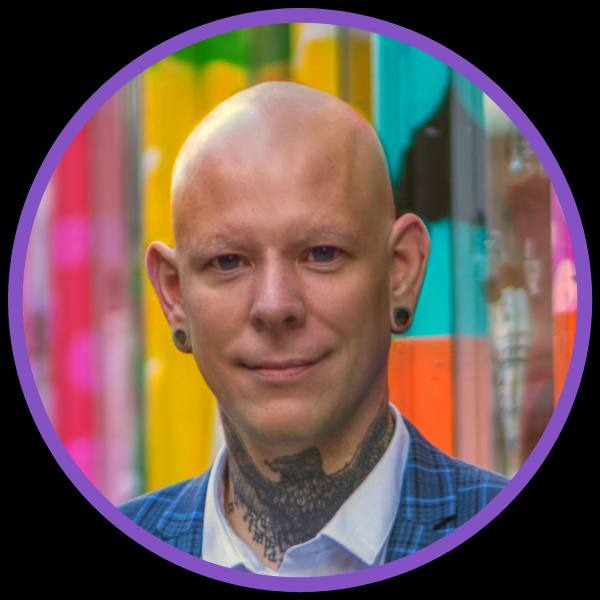
2026 Invited Speaker: Joel Vos, PhD MSc MA CPsychol FHEA AFBPS
Presenting: Existential compassion: An evidence-based call to open our HEARTS for our clients and our polarised world
Our world is in crisis. Opinions are polarised, extremism is rising, and consequently, people struggle with mental health problems. We urgently need existential leaders, therapists, coaches, and researchers who look beyond the surface and respond sensitively to the existential roots of our crises.
What is the heart of the existential approach? I will argue this is existential compassion, which involves authentically honouring our Human dignity, Embedding ourselves in our social context, Attempting at finding meaning despite life’s challenges, taking our Responsibility to reconstruct and reconcile, telling the Truth when we hurt each other, and creating Safety, safeness, and sharing resources (acronym: HEARTS). Existential compassion is grounded in respecting an individual’s dignity, i.e., each person’s inherent ability and right to their own Reflexivity, Expression, Selfhood, Purpose, Enablement, Choice, and Totality of their experiences, meanings, and approach to meaning-making (acronym: RESPECT).
Can everyone have existential compassion? I will review research demonstrating how humans evolved neurocognitive capacities for meaning-making, which have been shaped dynamically through interactions with the resources, narratives, and dynamics of society, social networks, and personal circumstances. Western history suggests that people often restrict their neurocognitive potential through narrow, traditional-conformist, or goal-oriented/mechanistic approaches. For example, existential compassion appears threatened by contemporary traditional-conformist trends and AI’s mechanistic approach to life. We may find hope in existential compassionate cultures, such as African Ubuntu, and in individuals such as Desmond Tutu who keep RESPECT in their HEARTS.
How can we find existential compassion in our challenging world? The Meaning-Oriented Social and Individual Changes (MOSAIC) Framework explains how people envision and realise their meanings in life, and how they appraise and experience existential challenges and traumas. Grounded in a systematic literature review of 667 studies and validated in over 1440 individuals, MOSAIC offers the most comprehensive understanding of why ordinary individuals radicalise, and the appeal of gangs, populism, extremism, and fascism. Radicalisation/polarisation involves a narrowing of life’s meanings and a shift towards abstract meanings through an increasingly traditional-conformist, mechanistic/goal-oriented, and non-critical-intuitive approach.
What can we do? As my meta-analyses show, existential therapy, counselling, and coaching can be highly effective in helping individuals. However, we need to go beyond the safety of our therapy office. We need to provide skills on the streets, in war and crisis zones, as in my pilot study on the Meaning-Making App. Most of all, we need an ambitious agenda for meaningful education that teaches HEARTS and RESPECT to young people, and advocate for the universal human right to a meaningful life.
Existential compassion for others is possible only if we first extend it to ourselves. How can we develop existential self-compassion? We need to develop safety and share resources within our existential community. We must take our responsibility to recognise each other’s human dignity, speak the truth when people radicalise and harm one another, and reconcile when necessary. Let’s practice our existential compassion today, as Martin Luther King said, ‘the time is always right to do what is right.’